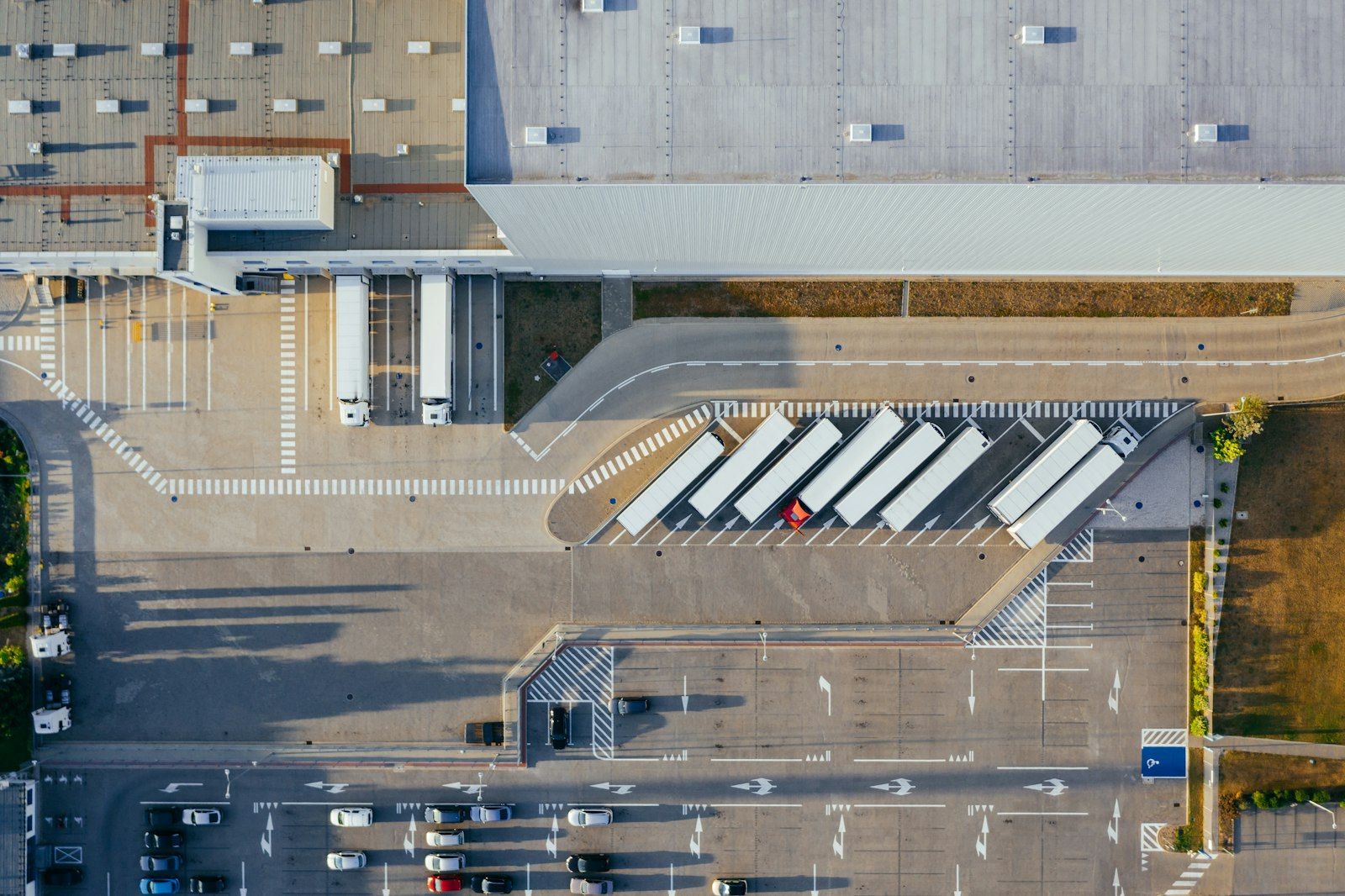
For decades, industrial real estate was the least glamorous corner of commercial property: big gray boxes on the edge of town, filled with pallets and forklifts. Then consumers started expecting deliveries in two days, then one, then the same afternoon. That expectation transformed warehouses into critical infrastructure, and it turned the humble distribution center into one of the best-performing property types in the country. Here is how the engine works and what it means for investors.
A traditional retailer ships goods in bulk from a regional distribution center to its stores, and shoppers do the final step themselves. E-commerce breaks that model. Every order is picked, packed and shipped individually, and the retailer needs to hold a much wider range of products in stock to promise fast delivery.
Several features of online retail push space needs higher:
- Broader inventory: An online store may offer far more products than a physical store has room to display.
- Individual order handling: Picking single items for millions of separate orders requires more floor area, conveyors and staging zones.
- Returns: Online purchases tend to be returned at higher rates than in-store purchases, and every return has to be received, inspected and restocked somewhere.
- Speed promises: Faster delivery requires inventory positioned closer to customers in more locations.
A widely cited industry rule of thumb holds that e-commerce requires roughly three times the logistics space of conventional store-based retail for the same volume of sales. The exact multiple varies by product and business model, but the direction is clear: as a larger share of retail spending moves online, warehouse demand grows faster than retail sales themselves.
The rise of the last mile
The "last mile" is the final leg of delivery, from a local facility to a customer's door. It is also the most expensive part of the shipping journey, because it involves many stops, traffic and labor for each package. Shortening that leg saves money and time, which is why companies will pay a premium for warehouse space inside or near dense population centers.
Last-mile buildings tend to be smaller than the giant regional fulfillment centers found along interstate corridors. They may be older infill properties, sometimes only tens of thousands of square feet, located in urban neighborhoods or close-in suburbs. What they lack in size they make up for in location.
~3xspace e-commerce needs vs. store retail (rule of thumb)
32-40 fttypical clear height in modern bulk warehouses
39 yrsIRS depreciation period for industrial buildings
Scarcity is the core of the investment case. In many metro areas, the land near customers is already built on, zoning for new industrial uses is difficult to obtain, and neighbors often resist truck traffic. Some older industrial sites have been converted to housing or other uses, shrinking supply further. When a tenant needs to reach a million households within an hour, there may be only a handful of suitable buildings to choose from.
In last-mile logistics, the building is ordinary. The address is what is scarce.
The main flavors of industrial property
"Industrial" covers a wide range of buildings with very different risk profiles. Before investing, know which segment you are looking at.
| Type | Typical profile | Key considerations |
|---|
| Bulk distribution | Very large buildings near highways, often single tenant | Large tenant exposure, competition from new construction |
| Last-mile / infill | Smaller buildings near dense population | Premium rents, older buildings, limited parking and truck space |
| Flex / light industrial | Mix of warehouse and office or showroom | Many small tenants, more management, steady local demand |
| Cold storage | Refrigerated or frozen facilities | High build cost, specialized operators, higher utility needs |
| Manufacturing | Production facilities with heavy power or equipment | Harder to re-lease if the user leaves |
Small-bay and flex buildings are often the most accessible entry point for individual investors because the price points are lower and the tenant base is diversified across local businesses such as contractors, distributors and service companies. Larger bulk assets are more often held by institutions and accessed by individuals through funds or publicly traded vehicles.
What makes a warehouse competitive
Not every industrial building benefits equally from logistics demand. Tenants today evaluate buildings on functional specifications, and an older property that falls short can struggle to attract them even in a strong market.
- Clear height: The usable height inside the building determines how high goods can be racked. Older buildings with low clear heights hold less inventory per square foot.
- Loading: Count dock-high doors and drive-in doors relative to building size. Last-mile users with many vans may need more doors than a traditional storage tenant.
- Truck court and trailer parking: Deep truck courts let tractor-trailers maneuver safely. Space for trailer and van parking is increasingly valuable.
- Power: Automation, refrigeration and electric delivery fleets demand more electrical capacity than older buildings were designed to provide.
- Access: Proximity to highway interchanges, ports, airports, rail and, above all, customers.
- Labor pool: Fulfillment is labor intensive. Tenants look for areas where they can hire and retain workers.
Investor tip
Compare in-place rents with current market rents for similar buildings in the same submarket. Industrial leases signed several years ago may be well below today's levels, which can create built-in upside at renewal. Just verify the market rent with recent comparable leases, not asking rents.
Risks worth underwriting
Strong demand attracts capital, and capital builds buildings. Industrial has historically gone through construction waves, and when many large warehouses deliver into the same submarket at once, vacancy can rise and rent growth can stall for a period. Before buying, look at how much space is under construction nearby and how much has been leased in recent years.
Tenant concentration is another risk. A single-tenant warehouse is only as strong as its occupant's business and its commitment to that location. Logistics networks get reorganized, and companies sometimes consolidate facilities after a period of rapid expansion.
Consider a simple illustration. A 50,000 square foot infill building leased at an assumed $12 per square foot on a net basis produces $600,000 of annual base rent. If that sole tenant leaves, you may face months of downtime, leasing commissions and possibly tenant improvements before income resumes. Underwrite that scenario, even when the tenant appears solid.
Finally, watch for functional obsolescence and environmental issues. Older industrial sites may carry contamination from prior uses, so a Phase I environmental site assessment is a standard part of due diligence.
The bottom line
E-commerce did not just add demand for warehouses. It changed what kind of warehouse matters and where. Space close to consumers, with modern specifications and room for trucks and vans, sits at the center of how goods move today. For individual investors, the opportunity is real, but returns depend on picking the right segment, verifying building functionality, studying local supply and stress-testing for vacancy. As with any commercial purchase, work with an experienced broker, environmental consultant, attorney and CPA before you commit capital.

 Commercial Real Estate